Guides
Fire safety guides for landlords and building owners
Every guide on fire safety, assessments, doors, training and duties written for people who own or manage buildings in Epsom. Find the page that answers your question and learn what to do next.
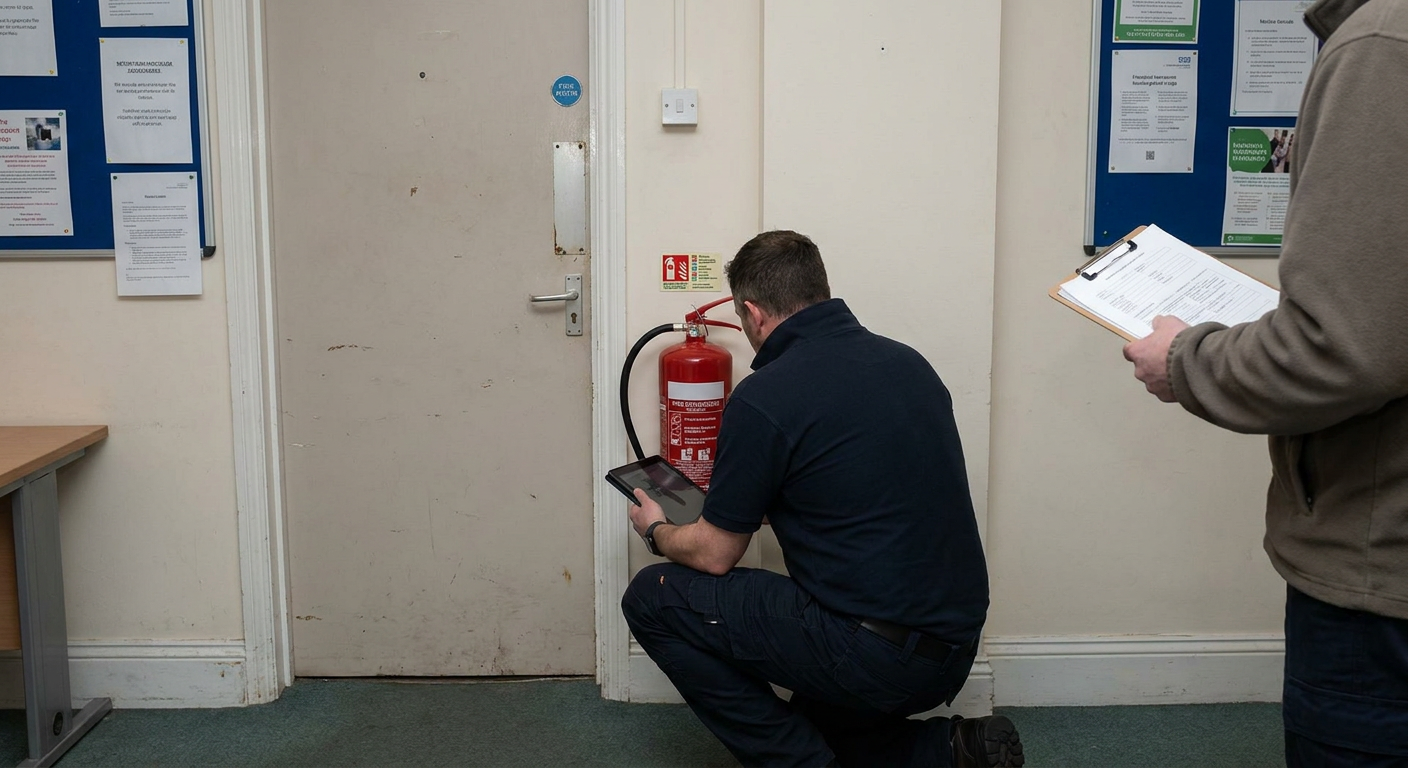
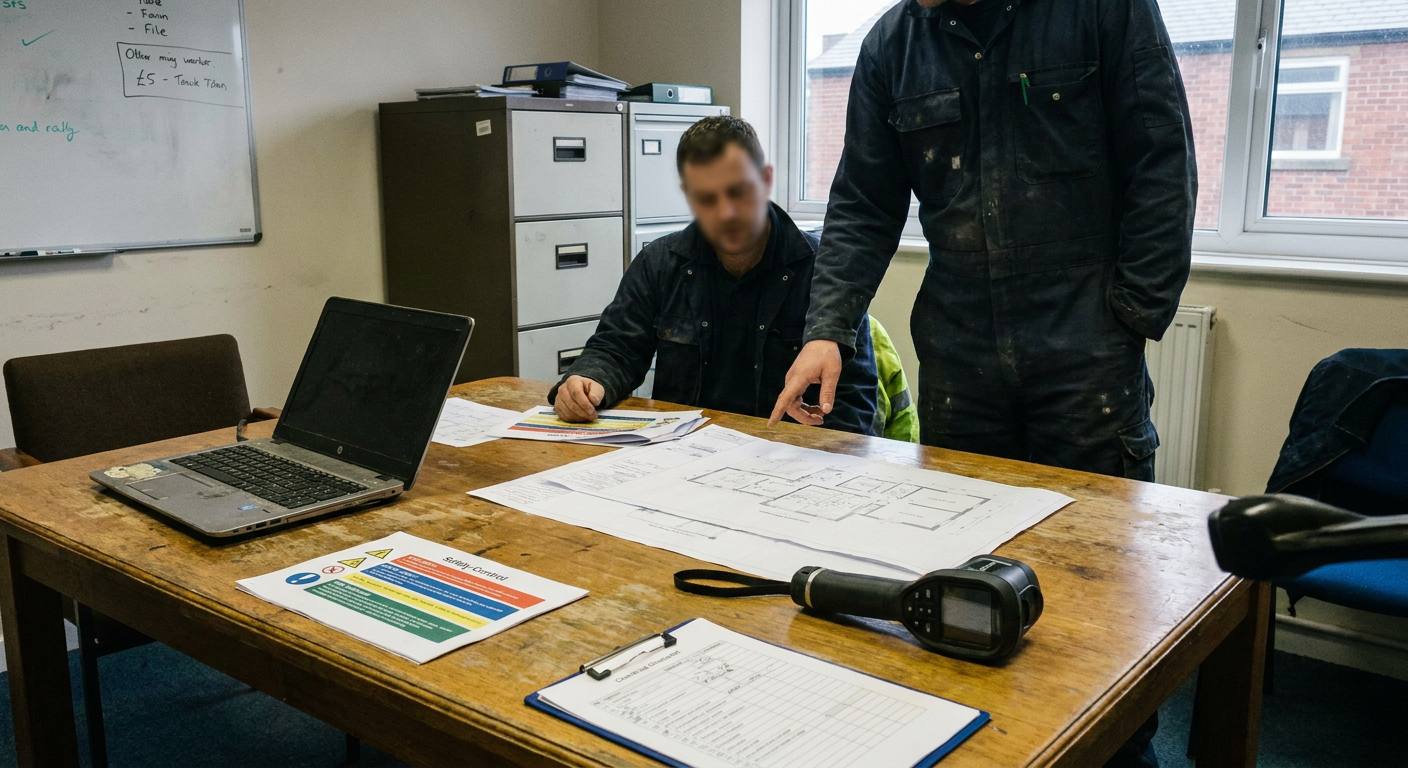
Assessments and surveys for your building
A fire risk assessment is the starting point for any building where people live, work or gather. The specialist firm examines escape routes, ignition sources and the people most at risk, then writes down what needs doing.
If you want to know what the visit involves before you book one, read about [what a fire risk assessment covers](/fire-risk-assessment-epsom). For houses in multiple occupation, landlords have extra conditions to meet, and the [HMO guide](/hmo-fire-risk-assessment-epsom) sets those out.
Student halls carry their own pressures because of the number of residents and the way the building is used. The [student accommodation page](/student-accommodation-fire-safety-epsom) explains what inspectors look for in those settings.
Beyond the main assessment, a [compartmentation survey](/compartmentation-survey-epsom) checks whether fire can travel through hidden gaps in walls and floors. A [fire strategy](/fire-strategy-epsom) pulls all of this together into a single document showing how the building should behave if a fire starts.
Doors, equipment and evacuation routes
Fire doors only work when they close properly. Gaps around the edges, damaged seals or broken closers let smoke through long before flames arrive. The [fire door inspection guide](/fire-door-inspection-epsom) explains what the specialist checks and why each part matters.
How often those doors need looking at depends on the building. Read about [fire door check frequency](/duties/fire-door-check-frequency-epsom) to find out whether yours needs attention every three months or every six.
Getting people out safely requires clear routes and a plan everyone understands. The [evacuation plans page](/fire-evacuation-plans-epsom) describes how a specialist maps escape routes and decides where assembly points should go.
Extinguishers and alarms sit alongside these measures. The [equipment checks guide](/fire-safety-equipment-checks) covers what testing looks like and when it should happen so nothing fails at the moment it is needed.
Training staff and wardens
People who work in a building need to know what to do when an alarm sounds. [Fire safety awareness training](/fire-safety-awareness-training-epsom) gives staff the basics: how to raise the alarm, which route to take and where to wait outside.
Some buildings need more than basic awareness. A designated person takes charge during a drill or a real event, counts who is out and reports anyone missing to the fire service. [Fire warden training](/fire-warden-training-epsom) prepares someone for those duties.
Both types of training are delivered by specialist firms. They tailor the session to the building layout and the people using it, so the advice matches what staff will actually face rather than generic classroom theory.
Your legal duties as the responsible person
The law places responsibility on a specific individual or organisation for every building that is not a single private home. If you are unsure whether that falls to you, the [responsible person guide](/duties/responsible-person-epsom) explains who holds the duty in different situations.
Once you know the duty is yours, the next step is usually booking an assessment. The [booking guide](/duties/booking-a-fire-risk-assessment-epsom) walks through what information to have ready and what questions to ask before you confirm.
Assessments do not last forever. Buildings change, tenants move in and regulations update. Find out [how often a reassessment is needed](/duties/how-often-reassessed) so you do not rely on an outdated report.
The [2022 fire safety regulations](/duties/fire-safety-regulations-2022-epsom) added new requirements for taller residential buildings. If the council or fire service has written to you, the [letter response guide](/duties/council-fire-safety-letter-epsom) explains what to do next.
For landlords applying for or renewing an HMO licence, councils attach specific [fire safety conditions](/duties/hmo-licence-fire-safety) that must be met before the licence is granted.
Written policies and reports
Verbal instructions fade. Written procedures give staff something to refer back to and show inspectors that you have thought through the risks. The [fire safety policy guide](/fire-safety-policy-and-procedures-epsom) explains what a specialist firm includes in these documents.
A nominated person handles day-to-day fire safety tasks, from checking exits are clear to logging minor faults. Their role is defined in the [nominated person guide](/nominated-person-service-epsom).
Health and safety reporting overlaps with fire safety in many workplaces. The [health and safety reports page](/health-and-safety-reports-epsom) clarifies where the two areas meet and what a combined report should contain.
If you have a specific question that does not fit neatly into one category, the [common questions page](/duties/fire-safety-questions) addresses the things owners and managers ask most often.
Guides for towns around Epsom
Buildings differ from street to street. A Victorian terrace in one town presents different problems from a 1960s office block in the next. The guides below address fire risk management in specific places near Epsom.
Read about [New Malden](/by-town/new-malden) for flats and shops, or [Ewell](/by-town/ewell) for homes and offices. [North Cheam](/by-town/north-cheam) focuses on flats, while [Tolworth](/by-town/tolworth) covers office buildings.
For houses and HMOs in [Ashtead](/by-town/ashtead), or homes on [Epsom Downs](/by-town/epsom-downs) and in [Tadworth](/by-town/tadworth), separate pages explain what applies locally.
[Carshalton](/by-town/carshalton) addresses flats and shops, [Horton](/by-town/horton) covers homes and workplaces, and [Leatherhead](/by-town/leatherhead) looks at offices and flats. You can also browse the full list of [areas covered](/by-town) to find your location.
Articles on specific fire risks
Some problems need closer attention than a general guide provides. These articles deal with particular risks found in buildings across Epsom.
[Fire alarm testing and servicing](/stories/fire-alarm-testing-and-servicing-in-epsom-buildings) explains what regular maintenance involves and why panels fail without it. [Smoke and heat alarms](/stories/smoke-and-heat-alarms-in-epsom-rented-homes-and-flats) covers the rules for rented homes and flats.
Loft conversions create new escape problems. The [loft conversion guide](/stories/loft-conversions-in-epsom-escape-windows-and-doors) looks at windows and doors needed for safe exit. [Electrical fire risks](/stories/electrical-fire-risks-in-epsom-homes-and-workplaces) addresses faulty wiring and overloaded circuits.
Deliberate fires affect commercial premises differently from homes. The [arson prevention article](/stories/reducing-the-risk-of-arson-at-epsom-business-premises) suggests practical steps. When a building cannot rely on its usual safety measures, a [waking watch](/stories/waking-watch-in-epsom-flats-when-it-is-put-in-place) may be required temporarily.
Shops and cafes face their own challenges. The [high street fire safety guide](/stories/fire-safety-for-shops-and-cafes-on-epsom-high-streets) covers kitchens, stock storage and public access.
Ask a question about fire safety
Send a message describing your building and what worries you. A specialist firm will reply with advice. There is no obligation to book anything.
- No obligation
- Local specialists
- Plain advice
Guides
- Responsible person
Who counts as the responsible person for fire safety in a building in Epsom, how the duty is decided and what the role asks of landlords and employers.
- Booking an assessment
Finding out how to get a fire risk assessment in Epsom: what to have ready, who the assessment is for, and what a report should cover for your building.
- Review timing
How often a fire risk assessment should be redone, the reviews expected each year and the building changes that mean a fresh assessment is needed sooner.
- 2022 regulations
The Fire Safety Regulations 2022 explained for flat owners and managers in Epsom: the duties they add, the buildings they apply to, and what to record.
- Fire door checks
Fire door checks in Epsom blocks and workplaces: how often fire doors need checking, which doors are included and what each check looks at.
- Fire service letter
- HMO licence
HMO licence fire safety conditions often cover alarms, fire doors, escape routes and emergency lighting. See what councils ask of Epsom landlords.
- Common questions
Common fire safety questions from Epsom landlords, owners and managers, covering who is responsible, what records are kept and when checks are due.
- Autumn term checks
Fire safety checks before term starts, set out for student halls and shared houses: doors, escape routes, alarms and records to review over the summer.
- Advice
Fire safety advice for homes, flats, HMOs and workplaces in Epsom: what the law asks of owners, which checks matter and when to bring in an assessor.