Fire door guide
How often do fire doors need checking?
Find out how often communal and flat entrance doors should be checked, who can do the work, what gets recorded, and what a specialist inspection adds beyond a visual check.
Which doors to check and how often
If you manage a block of flats in Epsom, the question of how often do fire doors need checking comes down to two separate schedules. Communal doors on escape routes must be checked every three months. Flat entrance doors require an annual check.
These intervals come from the Fire Safety (England) Regulations 2022, which apply to buildings over eleven metres in height. If your block is shorter than that, the same rules do not apply automatically. But the responsible person still holds a duty under the Regulatory Reform (Fire Safety) Order to keep fire precautions adequate. A [fire risk assessment](/fire-risk-assessment-epsom) will set out what frequency makes sense for a lower building.
So you do have to check every flat entrance door, not just the communal ones. The regulations treat them differently because residents control their own front doors, making access harder to arrange. That is why the flat entrance door check rules allow twelve months between inspections, while shared corridors demand quarterly attention. Getting the fire door inspection frequency right for flats means following both schedules without mixing them up.
What counts as a check and who can do it
A routine check is a visual inspection. It does not require tools or specialist training. A caretaker, building manager or nominated person can carry it out. You can read more about that role on the [nominated person page](/nominated-person-service-epsom).
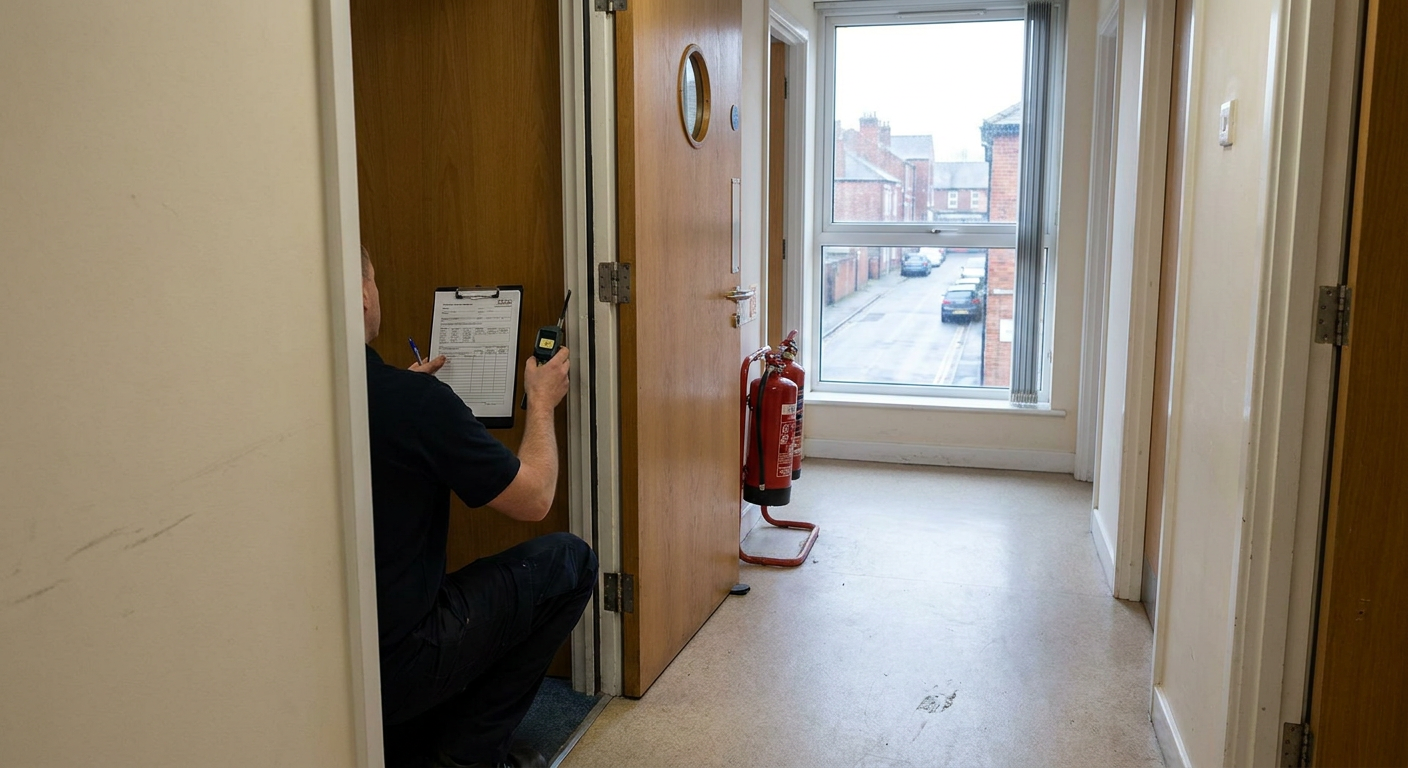
During a visual check, the person looks at the door leaf, frame, hinges, closer and seals. They confirm the door closes fully into the frame under its own power. They look for obvious damage, missing screws or gaps around the edges. They do not take measurements with gauges or test the intumescent material.
Quarterly fire door checks for a block fall to whoever manages the day-to-day running of the building. But a formal inspection is different. When people ask who can inspect fire doors to a professional standard, the answer is a competent specialist. A specialist uses gap gauges, checks hinge ratings, tests smoke seals and verifies that the door set matches its certification. A visual check keeps the schedule ticking over; a specialist inspection confirms the door actually performs as designed. Both matter for [fire door compliance in Epsom](/fire-door-inspection-epsom).
Recording results and dealing with refused access
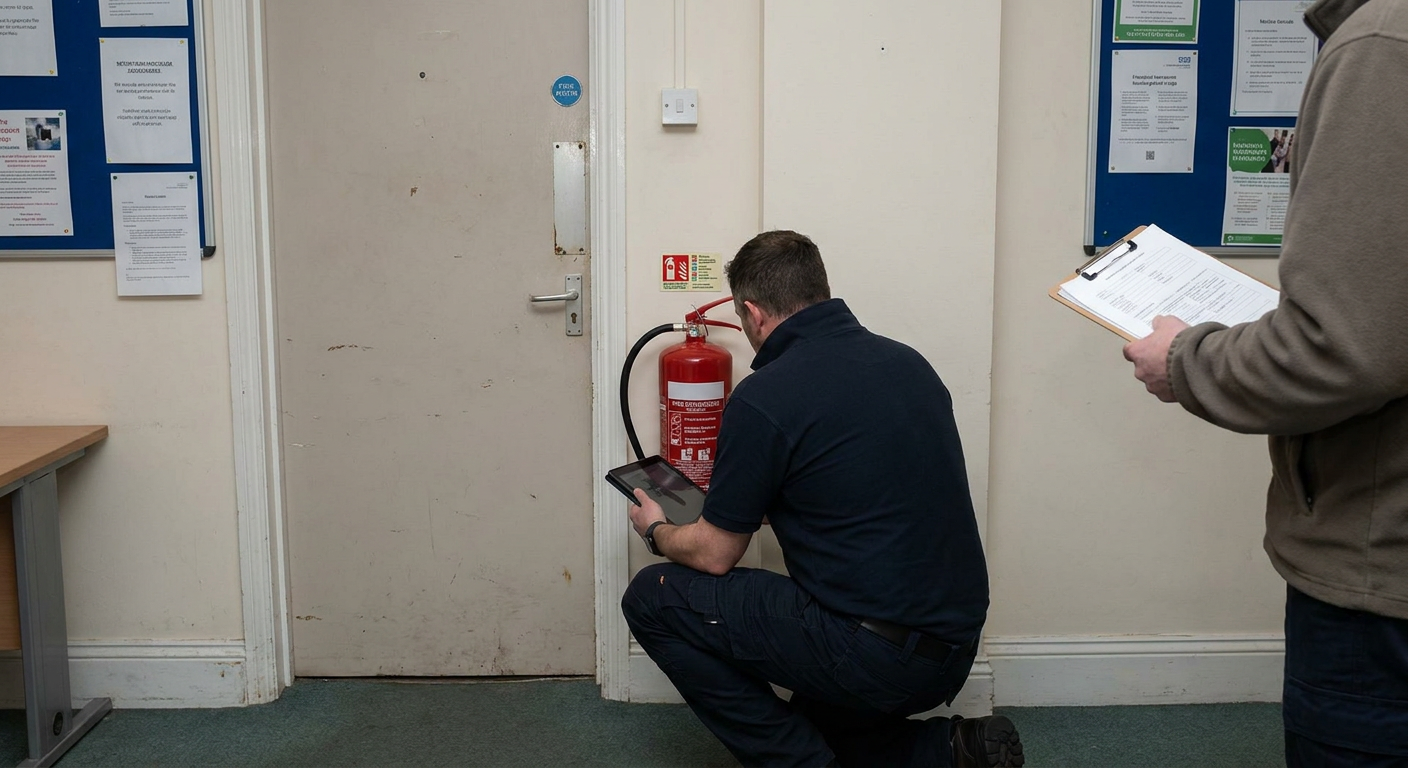
Every check needs a written record. Note the date, the door location, the name of the person checking and whether the door passed or failed. If something is wrong, describe it plainly: closer not latching, strip torn, hinge loose. Keep these records together so they show a continuous history of maintenance.
When a leaseholder refuses access for the annual flat entrance door check, document the refusal. Write to the resident explaining why the check matters for the safety of everyone in the building. Reference the [fire safety regulations](/duties/fire-safety-regulations-2022-epsom) if needed. If access remains blocked, seek legal advice. The responsible person cannot simply skip the door and move on.
A specialist inspection finds things a visual check misses. Intumescent strips might be painted over, rendering them useless. Hinges could lack the required number of fixings. The gap between door and frame might exceed three millimetres, enough to let smoke through long before flames arrive. A [compartmentation survey](/compartmentation-survey-epsom) looks at the wider picture, but the door itself needs close measurement. When a door fails, repair is sometimes possible. New seals, adjusted closers or replacement hinges can bring a door back to standard. But if the leaf is warped, the core damaged or the certification voided, the whole door set needs replacing.
Signs a fire door needs attention
A problem spotted during a routine walk-around might point to simple wear or a deeper failure in the door set. Here is what common signs usually indicate.
- Door does not close fully into the frame
- The closer may need adjustment or the hinges have dropped. A specialist measures the closing force to settle it.
- Visible gap larger than a few millimetres
- Smoke can pass through oversized gaps. A gap gauge reading during inspection confirms whether the clearance is within limits.
- Rubber strip peeling away from the edge
- The smoke seal has degraded or been pulled loose. Replacing the seal restores the barrier against cold smoke.
- Hinge screws missing or working loose
- The door leaf shifts under its own weight because fixings have loosened over time. A specialist inspects the hinges and frame to decide whether tightening the existing screws or replacing them will stop the sagging.
- Intumescent strip painted over
- Paint stops the strip expanding in heat. Stripping the paint or fitting a new seal restores fire resistance.
What affects the cost of a door inspection
Every block differs in layout, age and condition, so the work involved changes from building to building.
| What it depends on | Why it matters |
|---|---|
| Number of doors | More doors take longer to inspect and record, increasing the time spent on site. |
| Access arrangements | Gaining entry to individual flats requires coordination with residents, adding administrative work. |
| Door type and certification | Specialist sets with complex hardware take longer to verify against their original test evidence. |
| Condition of the doors | Doors in poor shape need detailed defect notes and recommendations, lengthening the report. |
The specialist explains the cost for your specific block before any work begins.
Ask about fire door checks for your block
Send an enquiry with details about your building. It goes to a specialist firm that handles inspections in Epsom. There is no obligation to proceed.
- No commitment
- Local specialists
- Clear answers