HMO licensing guide
HMO licence fire safety conditions landlords must meet
Find out what Epsom and Ewell Borough Council expects for alarm grades, door specifications and written assessments when applying for or renewing a shared house licence.
Meeting HMO licence fire safety conditions in Epsom
What the council expects with an application
When you apply for an HMO licence in Epsom or Ewell, the council reviews your fire precautions against specific standards. The hmo licence fire safety conditions cover alarms, doors, escape routes and the paperwork proving everything works. An epsom hmo licence application fire review looks at whether the building matches the guidance for its size and layout.
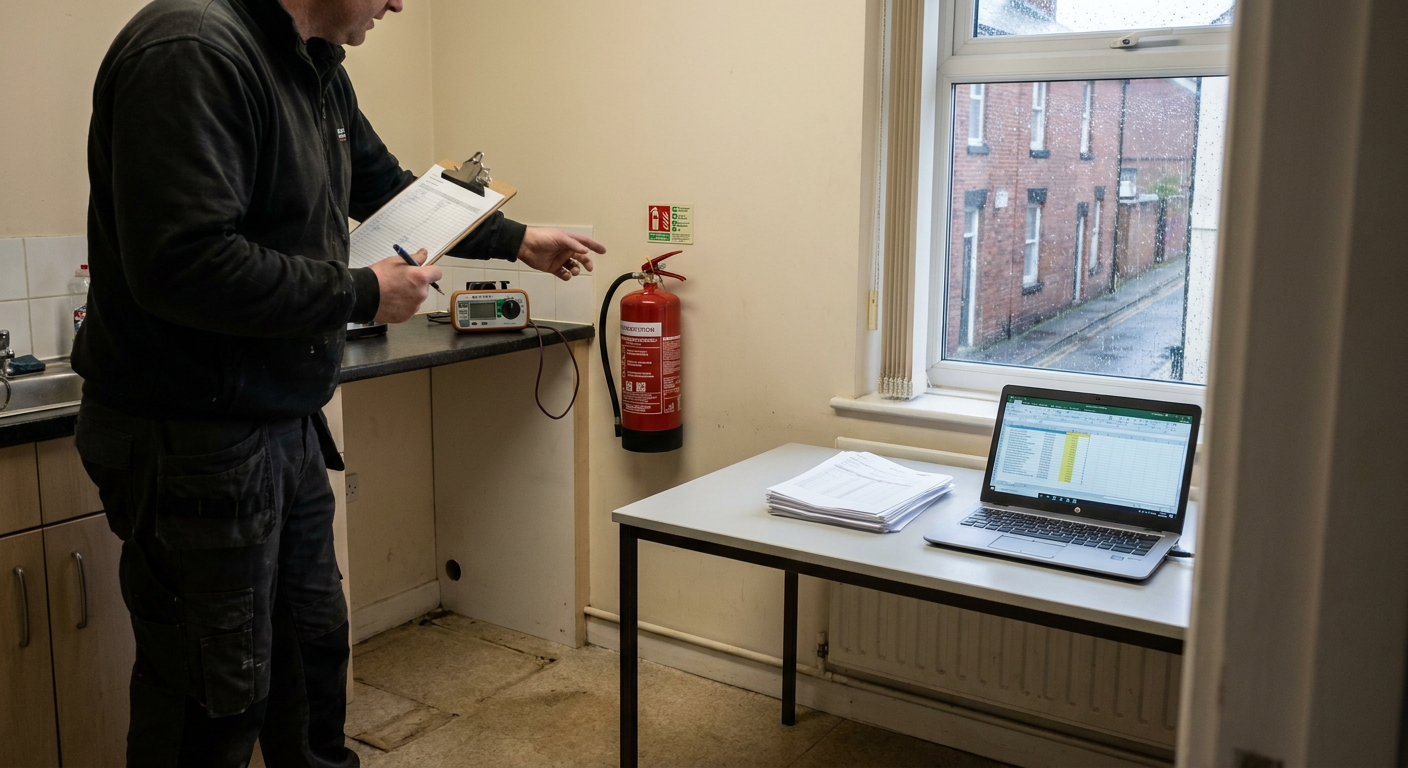
A written hmo fire risk assessment landlord document is expected alongside the form. The council wants proof that a competent person has walked through the building, identified hazards and recorded what needs doing. Without it, the application stalls. You can read more about what this covers on the [Fire Risk Assessment in Epsom](/fire-risk-assessment-epsom) page.
Bedsit fire safety standards differ slightly from those for a shared house where tenants cook together. The assessor determines which category applies before writing the report.
Alarm grades for shared houses
The question of what alarm grade Epsom and Ewell expect for a three storey shared house comes up often. For most three storey HMOs with up to five occupants, a Grade D1 LD2 system is the baseline. This means mains powered alarms with battery backup, placed in the escape route and high risk rooms like kitchens.
Larger buildings or those with more complex layouts may need a Grade A panel system. The hmo fire alarm grade requirements depend on floor count, occupant numbers and how quickly smoke could block the stairs. If the inspector finds the alarm system is the wrong grade during a visit, the council issues a notice requiring an upgrade within a set period. The licence will not be granted until the work is finished.
Testing matters as much as installation. Details on keeping systems reliable are covered in the [fire alarm testing guide](/stories/fire-alarm-testing-and-servicing-in-epsom-buildings).
Fire doors and closers on bedrooms
In most Epsom HMOs, FD30S doors are specified, meaning they resist fire for thirty minutes and carry cold smoke seals. Do all bedroom doors need to be fire doors with closers for the licence? Yes. Each one must have a self closing device that shuts it fully into the frame without sticking. Bathrooms and toilets sometimes fall outside this rule if they contain no ignition sources, but the specialist confirms that on site. Gaps around the edges matter. If a door has warped or the hinges have dropped, smoke passes through even when shut. A [fire door inspection](/fire-door-inspection-epsom) checks gaps, intumescent strips and closer strength so you know whether the doors meet the standard before the council visits.
Emergency lighting and escape routes
Do I need emergency lighting in the stairway of a small HMO? For a two storey house with a short, straight hallway, borrowed light from street lamps might suffice. But once a third storey is added, or the staircase turns, maintained emergency lighting becomes a standard condition.
The lights must stay on long enough for everyone to leave during a power cut. Bulkhead fittings near each exit door and along corridors are typical. Escape windows also play a part in upper rooms. The [loft conversions guide](/stories/loft-conversions-in-epsom-escape-windows-and-doors) explains how roof space changes affect escape options.
Clear signage helps unfamiliar tenants find their way out at night. [Evacuation plans](/fire-evacuation-plans-epsom) map these routes so the council sees you have thought through the worst case.
Renewing a licence and updating assessments
My licence is up for renewal, do I need a fresh assessment or will the old one do? Licence renewal fire conditions usually require a current document. If nothing has changed in the building and the original report is less than twelve months old, some councils accept it. Epsom and Ewell generally want a review dated within the last year.
Any alteration, new tenant profile or change in legislation means a full reassessment. How often a report should be redone depends on the building, explained further in the [reassessment frequency guide](/duties/how-often-reassessed).
Timing matters. How quickly can an assessment be done so I do not miss the licence deadline? Booking early avoids pressure. The [booking process page](/duties/booking-a-fire-risk-assessment-epsom) outlines what the specialist needs from you to schedule a visit promptly.
Signs your HMO may not meet conditions
Small details in a shared house can cause a licensing inspection to fail. Here is what landlords often spot too late and what each sign points toward.
- Bedroom door does not close on its own
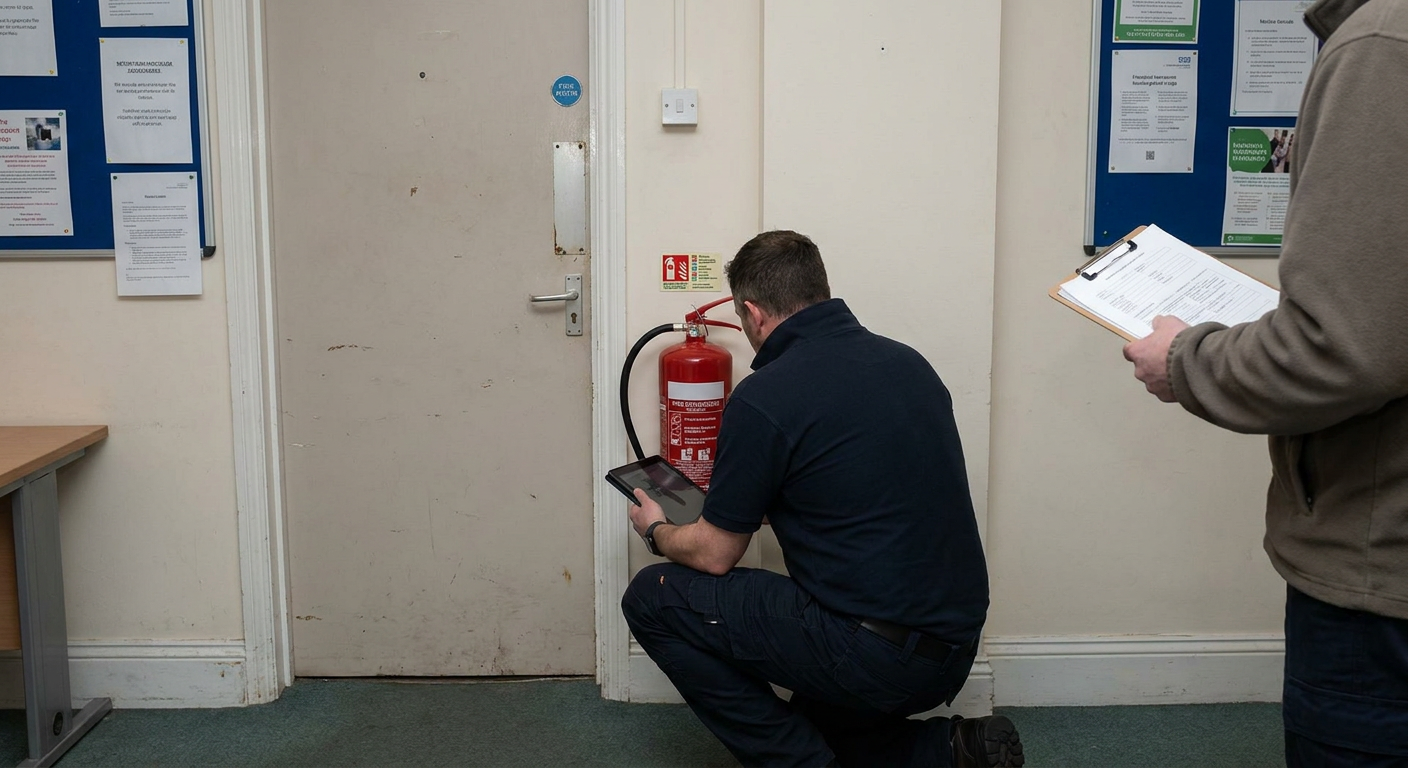
- A faulty or missing closer means the door cannot shut on its own during a fire. A specialist carries out a fire door inspection to determine whether the mechanism needs adjustment or full replacement.
- Smoke alarm beeping occasionally
- Battery backup is low or the unit is failing. Testing confirms if the whole system meets the required grade.
- Light switches off in the hallway at night
- Escape routes lack maintained emergency lighting. An assessor checks if borrowed light is sufficient or fittings are required.
- Gaps visible around door frames
- Cold smoke could pass through during a fire. Measuring these gaps shows if seals or new frames are necessary.
Typical costs for HMO fire safety work
Prices vary because every shared house in Epsom has a different layout, age and number of rooms. The size of the building and the current state of existing alarms or doors determine where a job falls within these ranges.
-
Fire risk assessment for an HMO
£250 - £500
Number of floors and total bedrooms assessed during the visit.
-
Supply and fit one FD30S door
£350 - £650
Frame condition and whether ironmongery needs replacing at the same time.
-
Grade D1 alarm system install
£800 - £1,800
How many detectors the layout requires and cable routing difficulty.
-
Emergency lighting circuit
£400 - £900
Length of the escape route and number of bulkhead fittings needed.
These figures indicate what work of this type typically costs locally. Nothing here is a quotation. Only a site inspection settles a figure for one home.
Ask about your HMO licence requirements
Send your enquiry and a specialist firm handling fire risk management in Epsom will respond. There is no obligation to proceed with any work.
- No obligation
- Local specialists
- Plain advice