Help guide
Common fire safety questions answered
Find out what a fire risk assessment costs, how often it needs reviewing, what goes in a logbook and what happens after the report is issued. Clear answers to the things Epsom owners ask most.
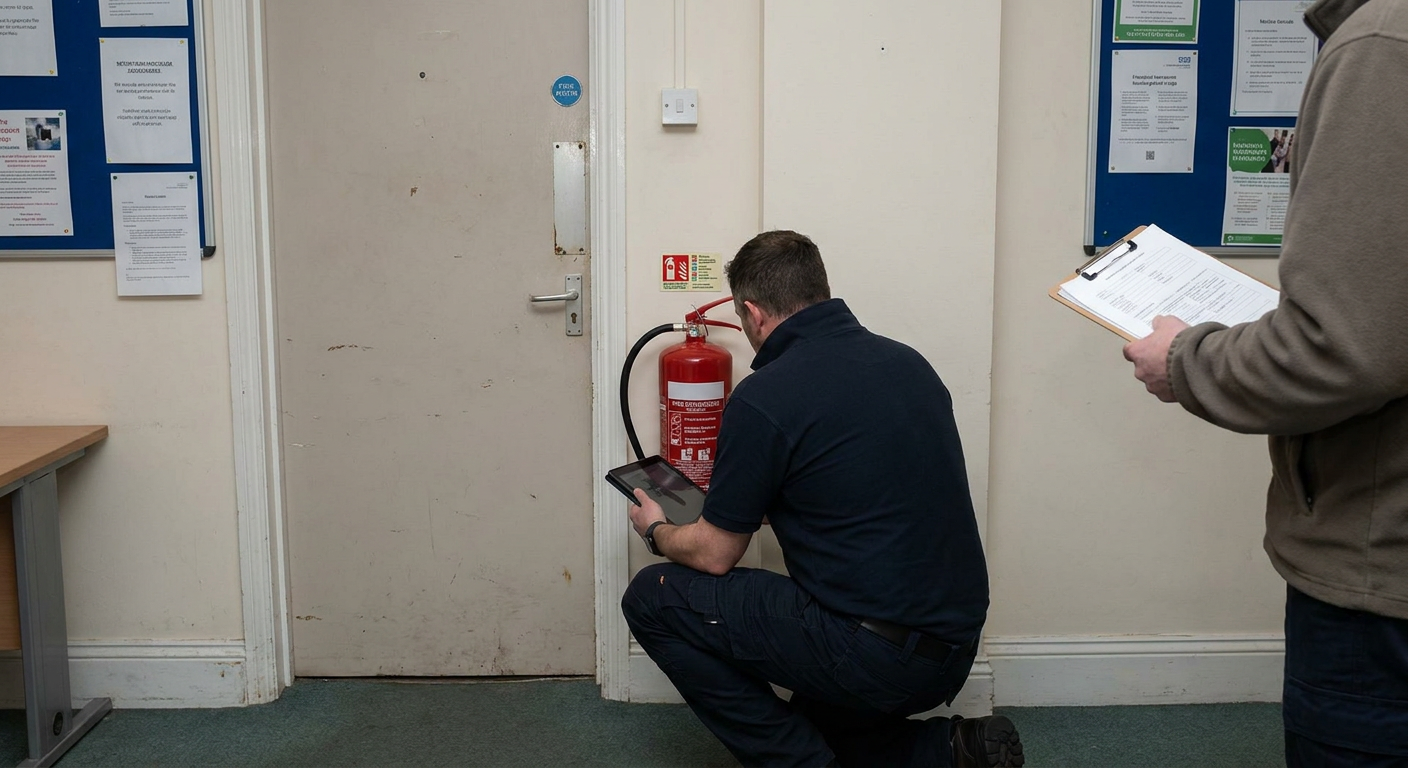
Common fire safety questions from Epsom owners
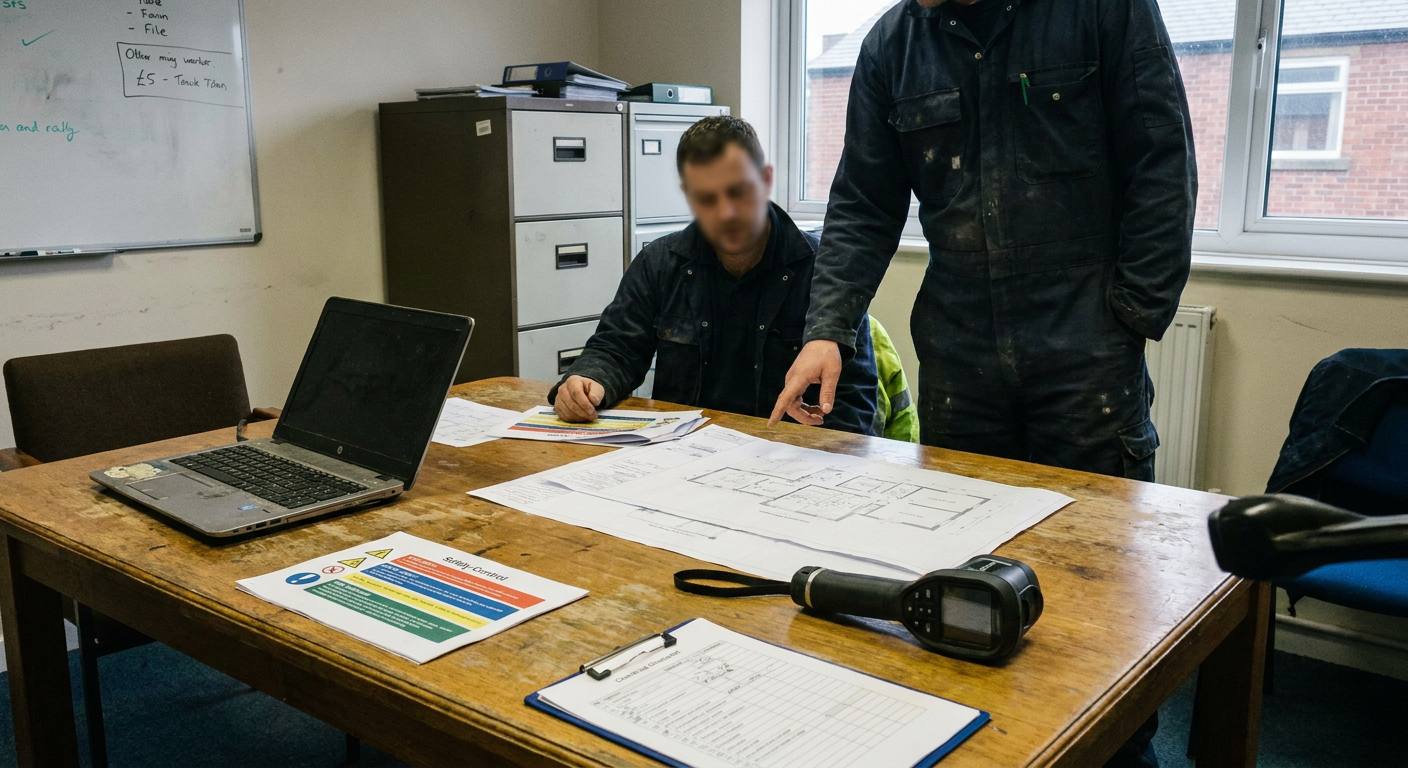
What does a fire risk assessment typically cost?
People often search for fire risk assessment cost uk figures before they pick up the phone, but there is no single number that applies everywhere. The fee depends on the building itself. A small shop on Epsom high street takes less time than a block of flats with shared corridors, plant rooms and multiple escape routes.
The specialist firm sets the price based on floor area, the number of storeys, how the building is used and whether it houses people who sleep there. An HMO requires more detailed work than a single office because the assessor must consider the occupants who live there full time. You can read more about [Fire Risk Assessment in Epsom: What It Covers](/fire-risk-assessment-epsom) to see what the visit involves.
Before any work starts, the specialist explains exactly what the assessment will cover and what it will cost. Nothing is agreed until you have that figure and understand what it pays for.
How often should the assessment be reviewed?
The law does not set a fixed calendar date. Instead, it says the responsible person must keep the assessment under review. In practice, most specialists recommend looking at it every year, or sooner if something changes. If you are wondering how often review fire assessment schedules apply to your building, the answer usually comes down to what has happened since the last visit.
A change of use, new tenants, building works or a fire incident all mean the document needs updating. The responsible person decides when to act, sometimes with advice from the specialist who wrote the original report. Read more about [How Often Should a Fire Risk Assessment Be Redone?](/duties/how-often-reassessed) for the details that apply in Epsom.
If you rent out rooms in an HMO, the council may attach conditions to your licence specifying a review period. Those terms override general guidance. Check the [HMO Licence Fire Safety Conditions](/duties/hmo-licence-fire-safety) page if your property falls into that category.
What goes in a fire logbook and how long to keep it
When people ask about a fire logbook what to record inside it, the short answer is everything related to fire safety maintenance. That means alarm test results, emergency lighting checks, fire door inspections, extinguisher servicing records and staff training dates. Each entry needs a date, the name of the person who did the work and what they found.
You should keep these records for the life of the building, or at least as long as you remain the responsible person. Insurers and enforcement officers can ask to see them at any point. If you let the property, keeping accurate logs is part of the fire safety advice landlords Epsom owners rely on to stay compliant.
A separate [Fire Door Inspection in Epsom](/fire-door-inspection-epsom) produces its own paperwork, which also belongs in the logbook. So do certificates from [Fire Extinguisher Testing in Epsom](/fire-safety-equipment-checks). The logbook pulls all of these documents into one place so you can show a complete history of maintenance.
My insurer has asked for proof of fire safety
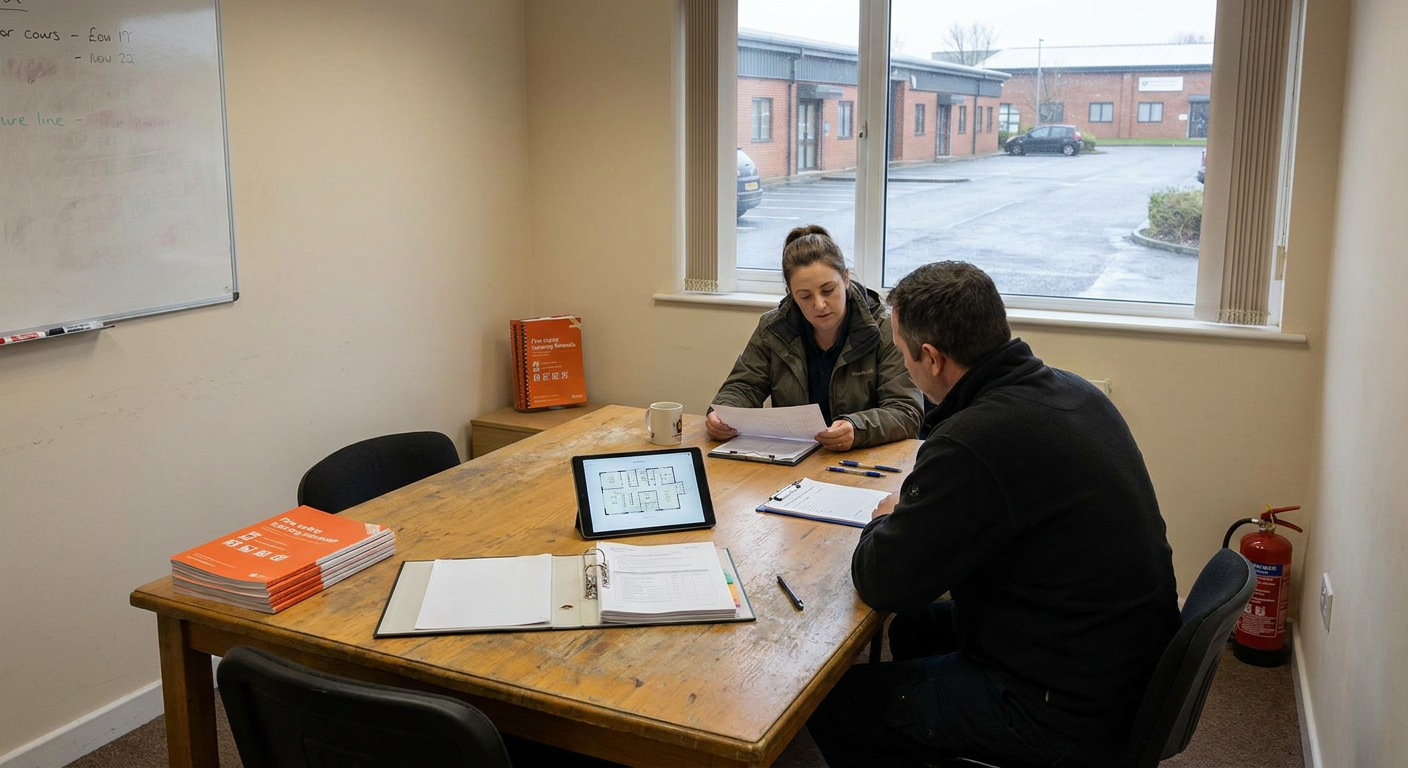
When an insurer wants fire assessment documentation, they are asking for the completed report and evidence that you have acted on its findings. Send them the most recent assessment along with any follow-up certificates, such as alarm servicing records or compartmentation survey reports.
Do not send half-finished paperwork. If the report lists actions that are still outstanding, include a written plan showing when each one will be done. Some insurers accept this; others insist the work is finished first. Either way, the specialist who carried out the assessment can advise on what the insurer expects.
For buildings where fire spread is a particular concern, the insurer might ask for a [Compartmentation Survey in Epsom](/compartmentation-survey-epsom) alongside the main report. This looks specifically at walls, floors and ceiling voids to confirm they will hold back smoke and flame. Having both documents ready saves time when the request arrives.
What happens after the report lands
Receiving the document is the start of the process, not the end. People often worry about after fire risk assessment actions, thinking every item on the list must be done immediately. In reality, the report grades each finding by risk. High-priority items, like a blocked escape route or a missing fire door, need attention straight away. Lower-risk observations might have a longer deadline.
The responsible person decides how to proceed, though ignoring significant findings leaves them exposed if something goes wrong. If the report recommends a [Fire Strategy in Epsom](/fire-strategy-epsom) for a complex building, that strategy becomes the framework for everything else.
Some actions involve training rather than building work. Staff in a workplace may need [Fire Safety Awareness Training in Epsom](/fire-safety-awareness-training-epsom), while designated wardens require specific [Fire Warden Training in Epsom](/fire-warden-training-epsom). The report will say which roles need what.
Do I need to be present for the visit?
The assessor needs access to every part of the building, including locked cupboards, roof spaces and boiler rooms. You do not have to be the one holding the keys, but whoever lets them in must know where everything is. A tenant can open the door, but if they cannot access the plant room, the visit stalls.
For rented homes and HMOs, coordinating access is part of the job. The specialist firm will agree a time that works for the occupants. If you manage several properties around Epsom, Ewell or Ashtead, you might arrange consecutive visits so you only need to travel once.
Read [What Happens at a Fire Risk Assessment in Epsom](/handover/how-we-work-epsom) to see how the visit runs from arrival to departure. Knowing the process helps you brief whoever is meeting the assessor on the day.
Can one assessment cover several properties?
Each building needs its own report. A Victorian terrace converted into flats presents different risks from a 1970s office block, even if you own both. The layout, construction materials, occupancy and escape routes all change what the assessor must look at.
That said, booking assessments for multiple properties at the same time makes logistical sense. The specialist firm can schedule visits across Epsom and the surrounding towns efficiently. If you hold property in nearby areas like [New Malden](/by-town/new-malden), [Tolworth](/by-town/tolworth) or [Leatherhead](/by-town/leatherhead), the same firms cover those postcodes.
Bundling the bookings together does not merge the reports, but it does mean you deal with one round of scheduling rather than several. Each document remains specific to the building it describes, which is what enforcement officers and insurers expect to see.
Does the assessment include testing alarms and lights?
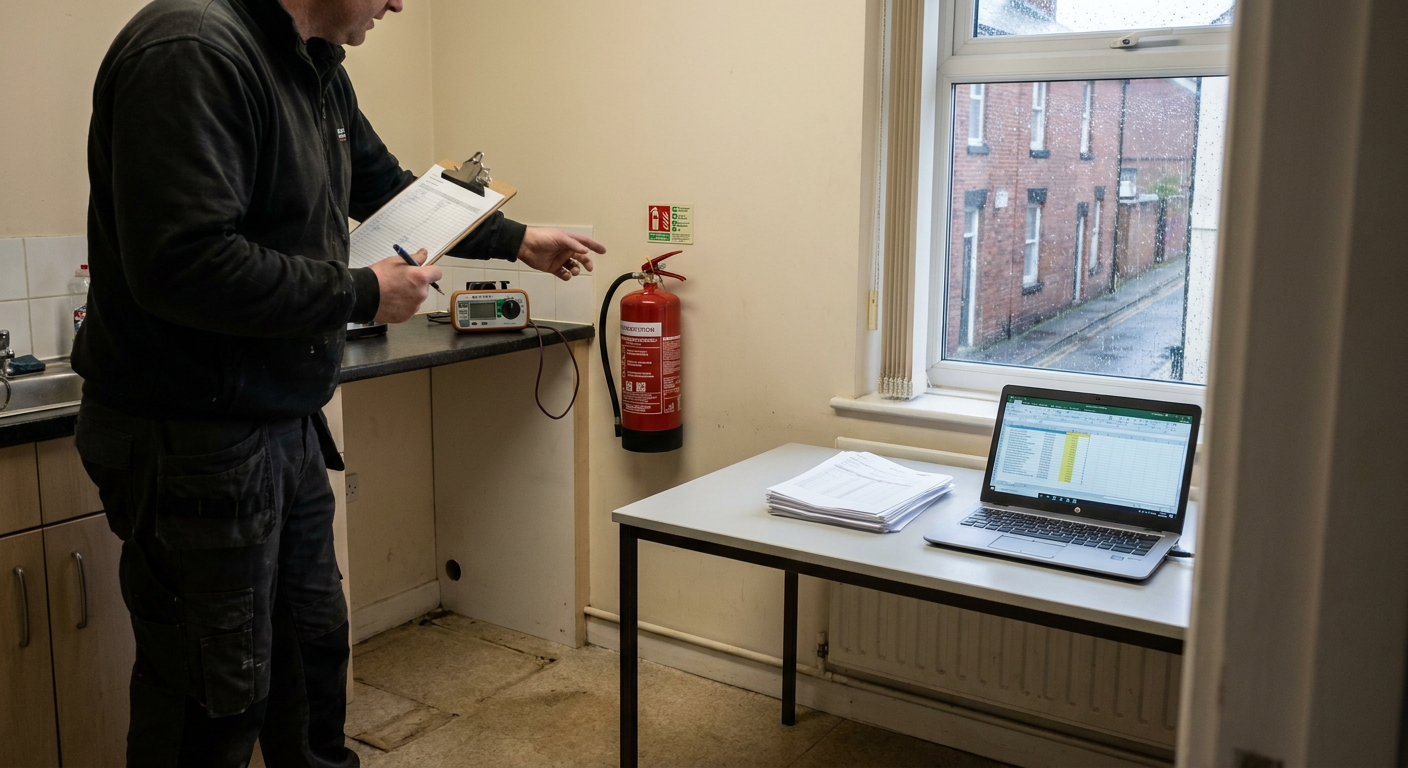
A fire risk assessment is a visual inspection and a review of procedures. The assessor checks whether alarms and emergency lighting appear to be in place, correctly positioned and maintained, but they do not carry out electrical testing during the visit.
Alarm servicing and emergency light testing are separate jobs done by specialist technicians. The assessment report will note whether you have records proving these systems were tested recently. If those records are missing, the report will recommend getting the tests done.
This distinction matters because people sometimes assume the assessment covers everything electrical. It does not. For details on maintaining detection systems, read about [fire alarm testing and servicing in Epsom buildings](/stories/fire-alarm-testing-and-servicing-in-epsom-buildings). Similarly, [smoke and heat alarms in Epsom rented homes and flats](/stories/smoke-and-heat-alarms-in-epsom-rented-homes-and-flats) fall under routine maintenance rather than the assessment itself.
Signs your home needs a fire safety check
Small problems in a building often point to larger gaps in fire safety. These are things you can see yourself without any specialist knowledge, and noticing them early matters.
- 1
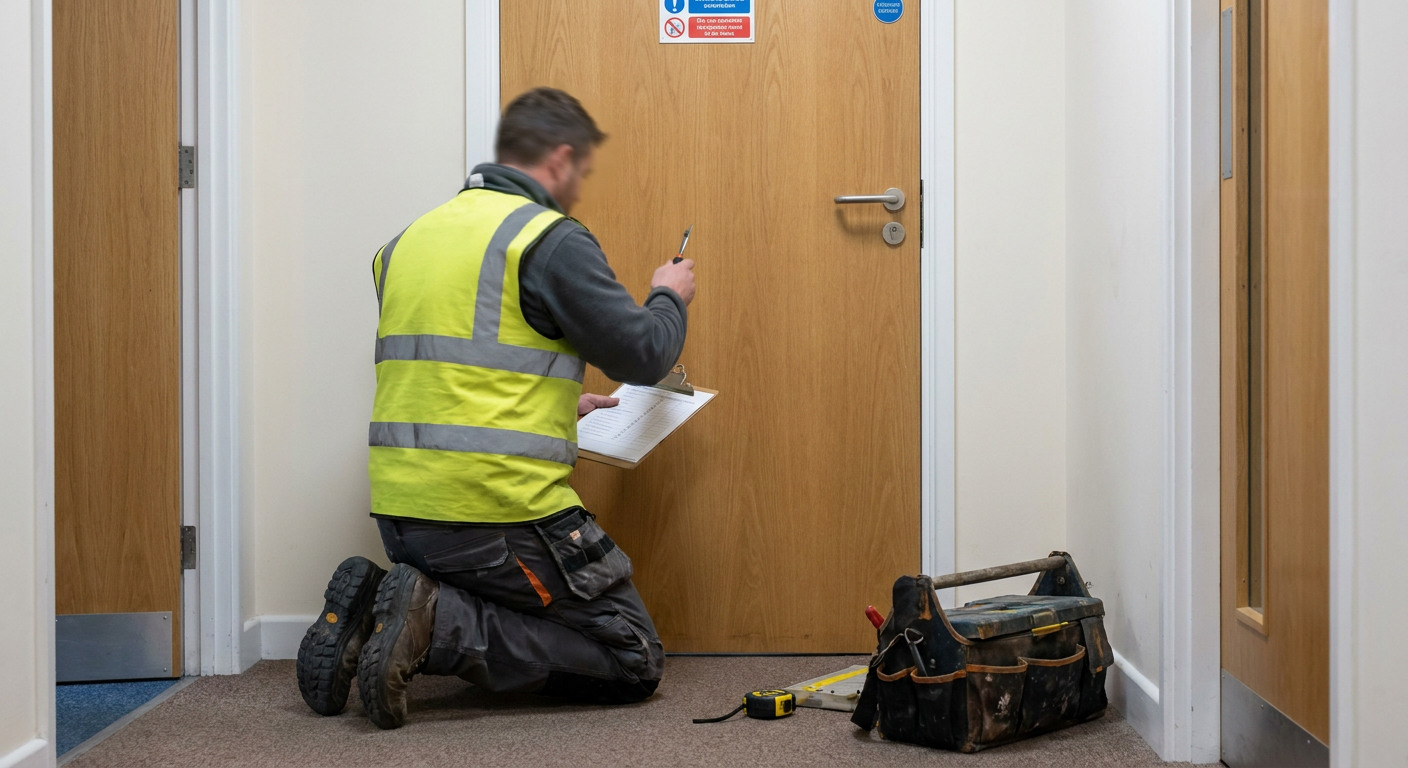
Fire doors left wedged open
A door propped open with a wedge or furniture cannot stop smoke spreading. It suggests the closer is broken or someone finds it inconvenient.
- 2
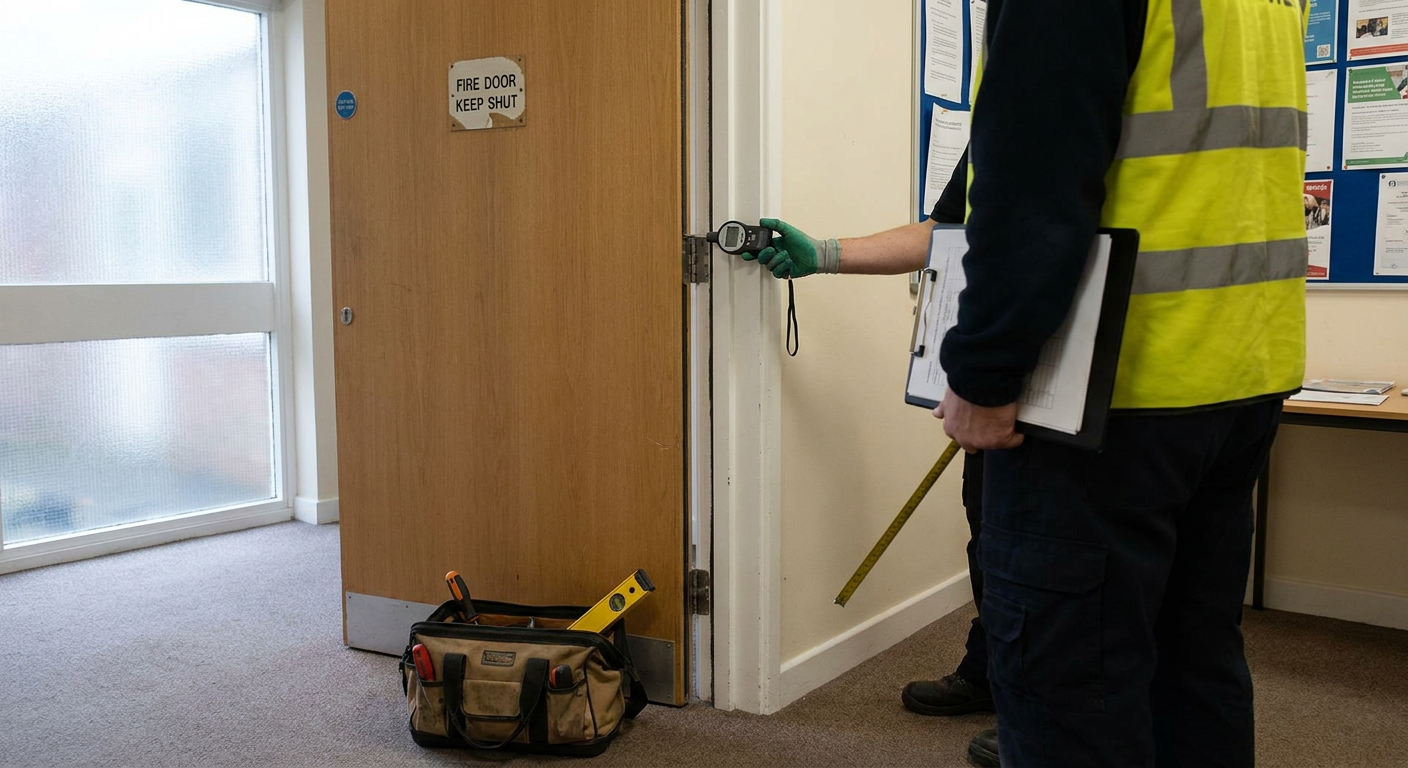
No visible alarm test records
If you cannot find a dated log of alarm tests anywhere in the building, the system may not be checked regularly.
- 3
Blocked corridors or stairwells
Boxes, bikes or furniture narrowing an escape route mean the path out is compromised if a fire starts.
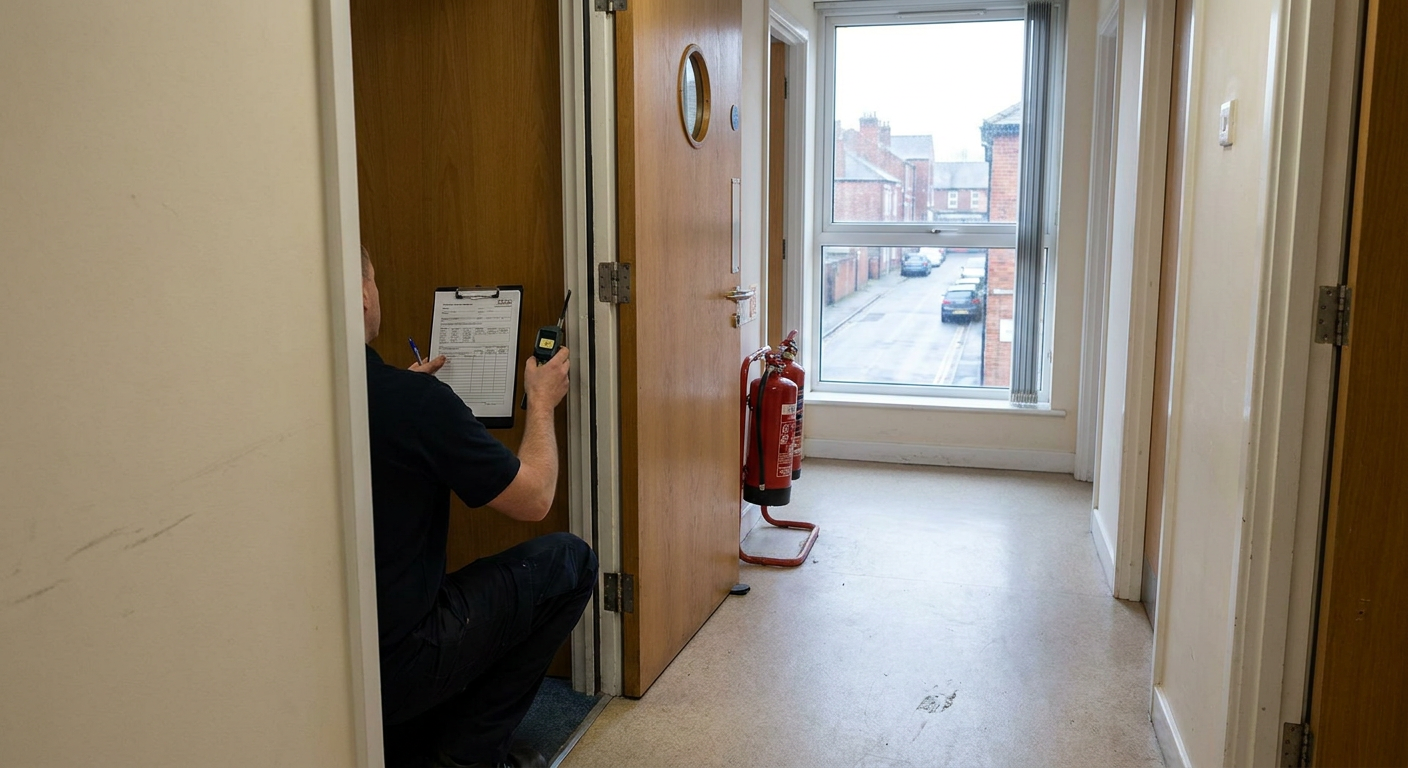
- 4
Cracks around pipe entries
Gaps where pipes pass through walls or ceilings allow smoke to travel between rooms that should be sealed off from each other.
- 5
Missing exit signs
An unfamiliar visitor should be able to find the way out without asking. Missing signs suggest the route was never planned properly.
What affects the cost of a fire risk assessment
Every building is different, so the work involved changes. The specialist firm prices the job based on what they actually need to inspect.
- Size of the building
- More floor space means more rooms, corridors and exits to examine during the visit.
- How the building is used
- Places where people sleep require deeper analysis than offices occupied only during the day.
- Number of storeys
- Multi-storey buildings have complex escape routes and additional fire separation to assess.
- Age and construction type
- Older buildings may have hidden voids or non-standard materials that take longer to evaluate.
- Occupant vulnerability
- Homes for elderly or disabled residents need detailed plans for assisted evacuation.
The specialist explains the exact cost for your building before any work begins.
Send your fire safety question
Write what you need to know. Your message goes to a local specialist who handles enquiries for Epsom. Sending a question does not book a visit or commit you to anything.
- No obligation
- Local response
- Plain answers