Equipment maintenance
Fire extinguisher testing in Epsom and equipment checks
Find out what intervals apply to alarms, emergency lighting and extinguishers in your building. Learn how a specialist reads the logbook, advises on what you actually need and plans fire extinguisher testing Epsom premises require.
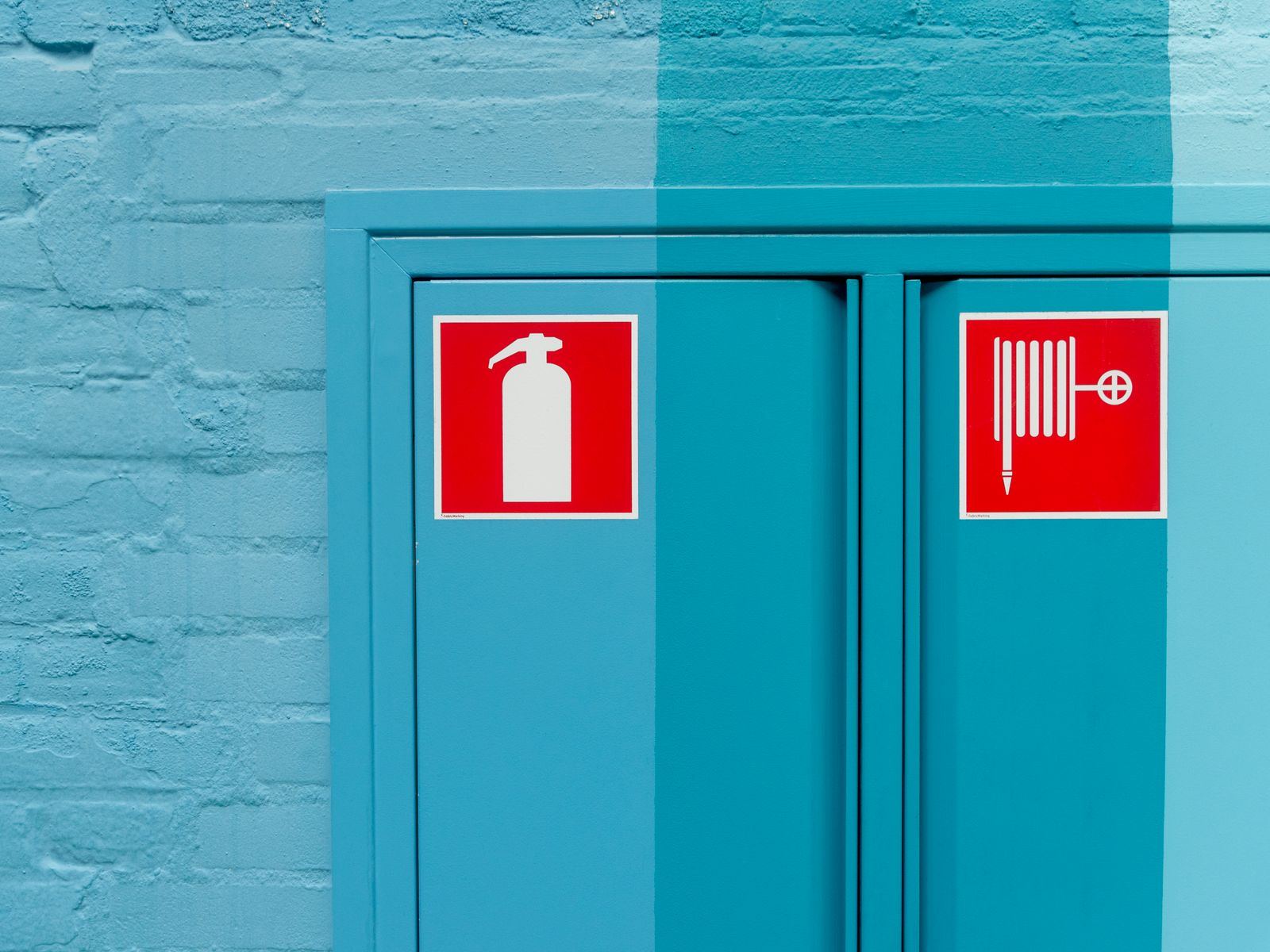
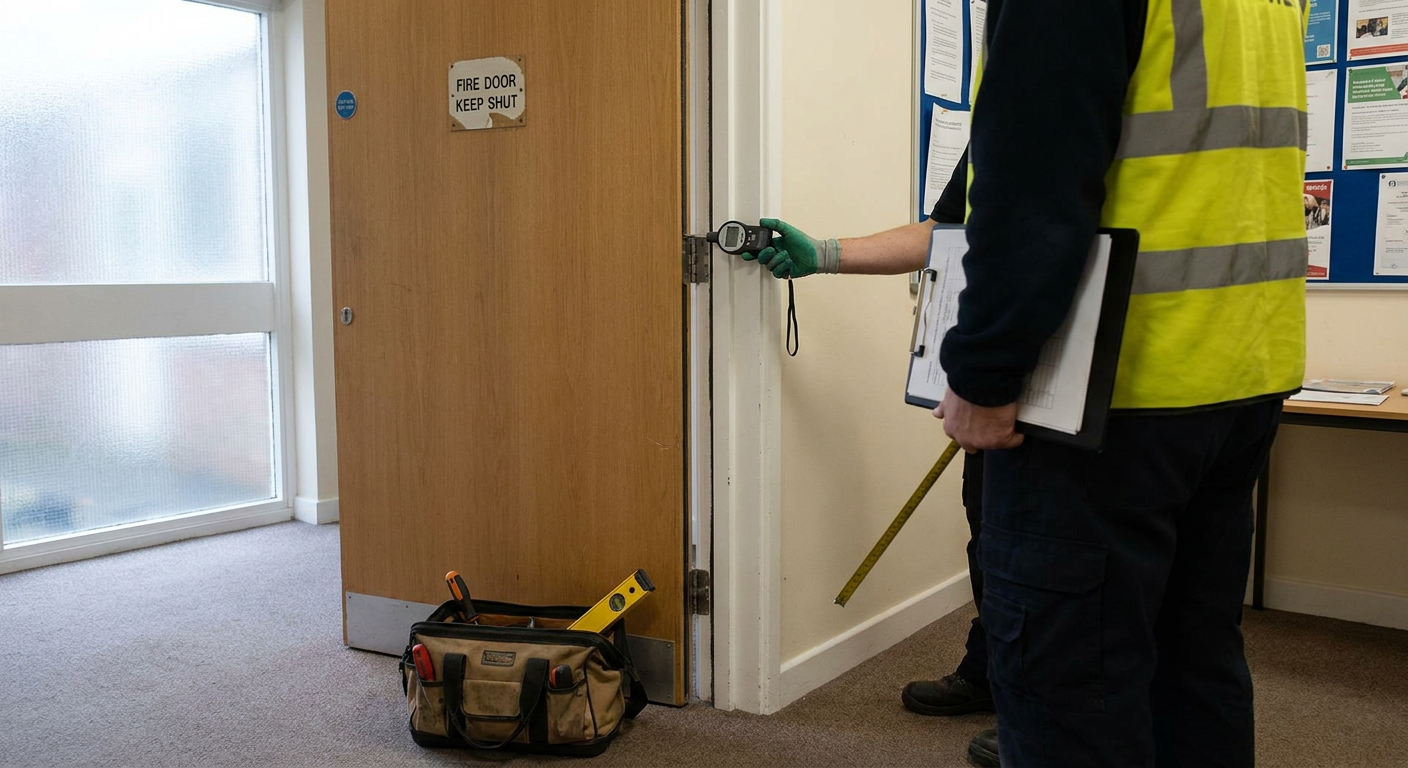
Testing intervals for extinguishers in Epsom buildings
Every portable extinguisher in a commercial or shared residential building needs regular attention. A basic visual check happens monthly, usually by the person responsible for fire safety in the building. The formal extinguisher service Epsom premises require takes place once a year, carried out by a competent technician who inspects the pressure gauge, checks the discharge hose and weighs the unit.
Beyond that annual visit, water and foam extinguishers need an extended service every five years. Carbon dioxide units follow a different schedule and require hydraulic testing after ten years. The specialist records each action in the logbook so the history stays intact. If you hold that logbook, those entries are the proof that maintenance is happening on time.
A [fire risk assessment](/fire-risk-assessment-epsom) determines which types of extinguisher belong where. The technician does not guess; they follow the plan already written for the building. When that plan is missing or outdated, the specialist flags it before any work starts.
Alarm testing and emergency lighting schedules
Fire alarm testing intervals depend on the system installed. Most buildings with a manual call point system need a weekly test. That involves pressing one call point, confirming the sounders work and resetting the panel. The person doing this does not need to hold an electrical qualification. A building manager or caretaker can run the weekly test themselves as long as they know how to reset the panel afterwards.
A full inspection by a specialist firm happens twice a year at minimum. During that visit, every detector, sounder and interface is checked against the cause and effect matrix. The results go straight into the logbook.
Emergency lighting follows its own rhythm. A short functional test runs monthly to confirm the lamps illuminate when mains power drops. Once a year, a specialist performs a full duration test, leaving the lights running on battery for three hours. This emergency lighting check Surrey buildings undergo proves the batteries still hold enough charge to guide people out during a real power failure.
Fixing gaps in an inherited logbook
Taking over a building often means taking over someone else's paperwork. If the fire logbook has blank months or missing certificates, the gaps matter because enforcement officers look for a continuous record. What to record in a fire logbook includes every test, service, fault and repair across alarms, lighting and extinguishers.
The first step is booking an annual fire equipment service. The visiting specialist examines every unit currently in the building, tests the alarm circuits and checks the emergency lights. They write up the current condition of everything. That report becomes the new baseline.
From there, the schedule resets. The specialist advises whether any expired extinguishers need replacing immediately or if they can wait until the next cycle. They also note anything missing from the previous regime, such as a lack of recorded weekly alarm tests. If the building operates as an HMO, the landlord should cross-reference these findings with their [HMO licence conditions](/duties/hmo-licence-fire-safety) to ensure nothing falls through the cracks.
Getting the right number and type of units
Buildings accumulate extinguishers over time. Someone buys a few, another person adds more, and eventually the corridors hold a mix that may not suit the actual risks. A specialist looks at the floor plan, the activities happening inside and the escape routes before deciding what belongs where.
Water extinguishers cover paper and wood fires but must never sit near electrical panels. Carbon dioxide units handle live electrical equipment. Foam works on flammable liquids. The specialist calculates the coverage area for each floor and specifies the correct rating. If the building already holds too many of the wrong type, they advise which ones to remove.
This review usually ties into a broader [fire strategy](/fire-strategy-epsom) for the premises. The strategy document sets out the logic behind every piece of equipment, so whoever manages the building next understands why a specific extinguisher hangs beside the server room rather than the kitchen.
Costs, timing and failed units
People holding the logbook often ask about the price of a yearly service visit for a small office or block of flats. Costs depend on the number of units, the complexity of the alarm system and the travel distance within Epsom. A specialist provides a figure only after knowing what is on site, because quoting blind leads to unexpected extras later.
Scheduling matters just as much. Testing can happen outside working hours if tenants or staff cannot be disturbed. The specialist arranges evening or weekend visits for offices and occupied blocks, though this needs agreeing in advance.
When a unit fails a test, the outcome depends on the fault. A blocked nozzle or a missing pin gets fixed during the same visit. A corroded cylinder or a dead battery in an emergency light fitting requires a replacement part. The specialist notes the failure in the logbook, removes the faulty item if it is unsafe, and returns with the replacement as soon as the part arrives. Nothing stays signed off as working when it is not.
Weekly tests versus annual servicing
Both keep the equipment legal and functional, but they involve different tasks and different people.
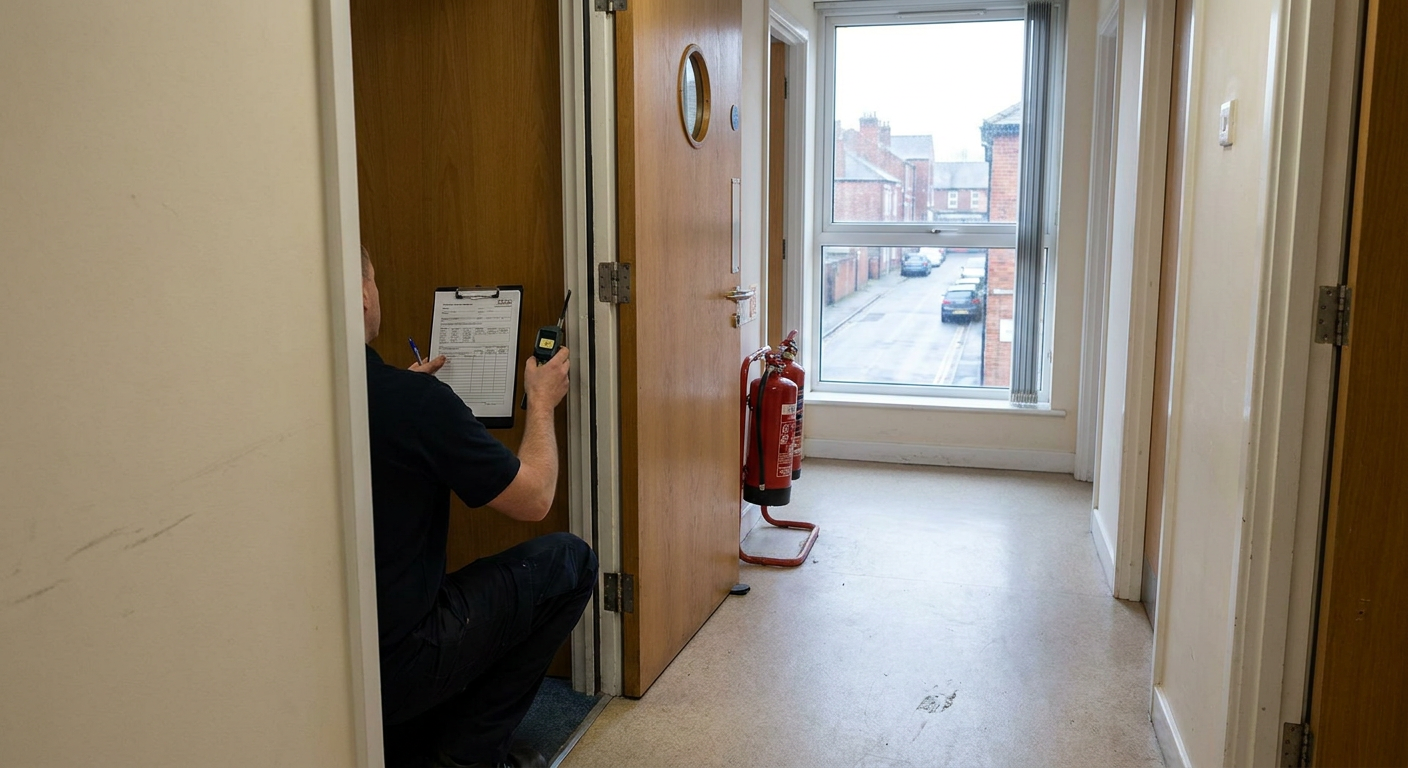
Who does it
- Weekly in-house test
- Building manager or nominated staff member
- Annual specialist service
- Competent fire equipment technician
What gets checked
- Weekly in-house test
- One call point and the sounders
- Annual specialist service
- Every detector, extinguisher and lamp
Logbook entry
- Weekly in-house test
- Brief note of date and result
- Annual specialist service
- Full certificate with measurements
Tools needed
- Weekly in-house test
- Call point key and reset code
- Annual specialist service
- Pressure gauges and test equipment
A specialist advises which tasks suit your staff after reviewing the building layout and systems.
Common questions on equipment upkeep
- Who carries out the weekly alarm test
- Any trained person on site can press the call point and reset the panel. No external contractor is needed for this weekly task.
- Can testing happen outside office hours
- Yes. Specialists schedule evening or weekend visits so tenants and staff are not disturbed by sounders or corridor closures.
- What happens when a unit fails the test
- Minor faults are fixed immediately. Replacing a whole cylinder or battery requires a return visit once the part arrives.
- How do I fix an incomplete logbook
- Book a full service. The specialist surveys everything present, records its condition and starts a fresh maintenance schedule.
Ask about equipment maintenance
Send details about your building and the logbook status. A specialist reviews the information and replies with advice on what needs testing or replacing next. There is no obligation to book a visit.
- No obligation to proceed
- Local specialists respond
- Advice based on your logbook