Fire safety guide
Fire alarm testing and servicing in Epsom buildings
Find out how fire alarms are tested in Epsom buildings, who carries out the weekly checks, what a specialist does during servicing, and what must be written in the log book.
Why fire alarms need regular testing
A fire alarm system only works if every part of it functions at the moment a fire starts. Batteries drain, call points get knocked, and sounders fail without warning. Regular testing is the only way to know the system will alert everyone in the building when it matters.
In commercial premises, shared residential blocks, and houses in multiple occupation across Epsom, the law requires the responsible person to keep the alarm system in working order. This responsibility falls on the landlord, managing agent, or business owner depending on who controls the building. A [fire risk assessment in Epsom](/fire-risk-assessment-epsom) will identify whether the current alarm setup matches the size and use of the building, and whether the testing schedule is adequate.
Testing is split into two parts. The first is a weekly check carried out by someone on site. The second is a periodic service performed by a specialist fire alarm firm. Both are recorded in the same log book, and both are examined if the fire service or local council inspects the premises.
The weekly test and who does it
Every week, someone should activate a different manual call point to confirm the alarm sounds throughout the building. In a small shop or office, this might be the manager. In a block of flats, it is usually the caretaker or a nominated person. If nobody has been assigned this task, a [nominated fire safety person in Epsom](/nominated-person-service-epsom) can take on the role so the duty does not get missed.
The weekly test does not require specialist tools. The person presses the call point, listens for the sounders, checks that any connected devices such as magnetic door holders release, and then resets the panel. They should note which call point was used and whether everything worked as expected.
If a sounder is too quiet in one room, or a detector fails to respond during a routine walk-through, the problem needs to be reported immediately. Leaving a fault until the next scheduled service leaves the building unprotected. Staff who notice issues during their normal work should know how to report them, which is why [fire safety awareness training in Epsom](/fire-safety-awareness-training-epsom) covers alarm faults alongside escape routes.
Periodic servicing by a specialist firm
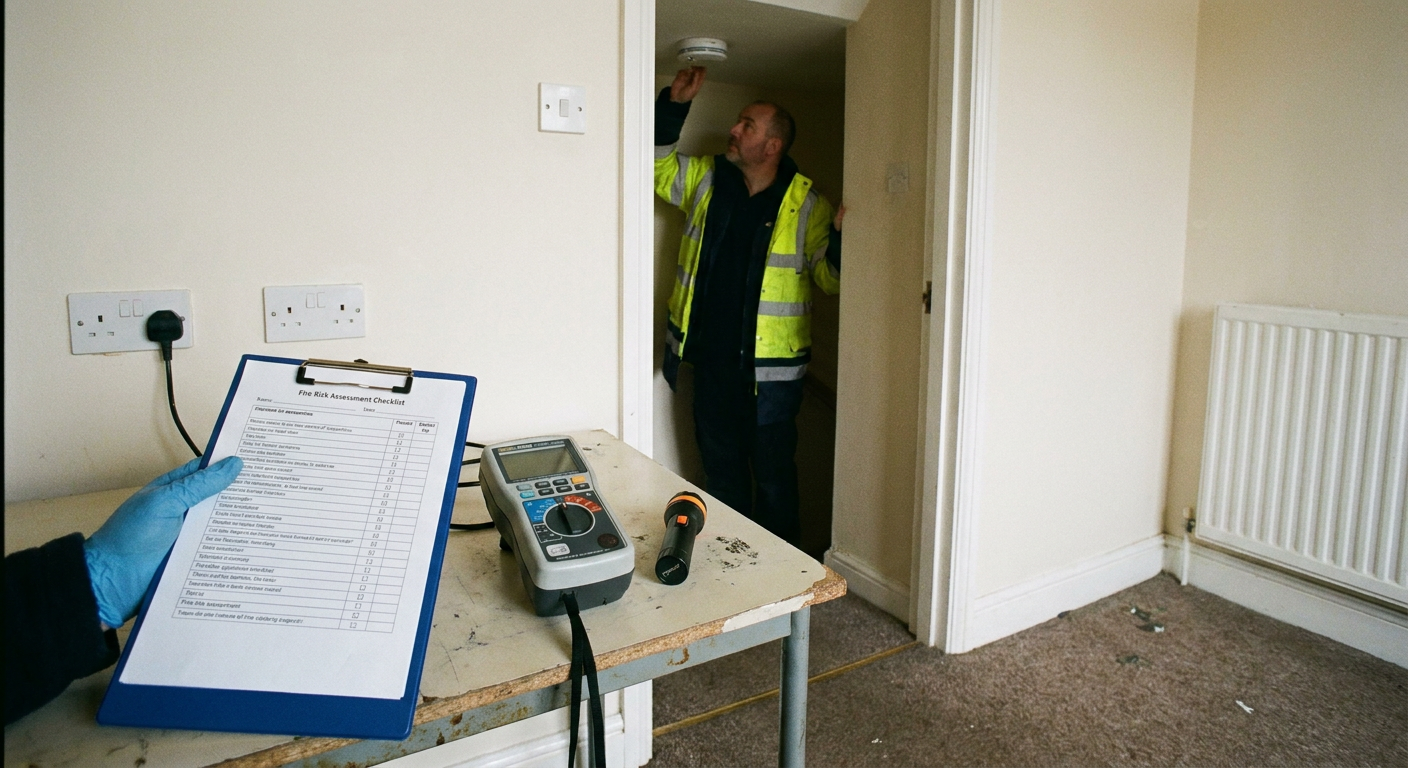
While the weekly test proves the alarm can sound, a full service proves the system is wired correctly, the backup batteries hold charge, and every detector responds to smoke or heat as designed. A specialist fire alarm company carries out this work, typically every six months for most buildings in Epsom.
The specialist tests each detector individually using simulated smoke or heat. They measure battery voltage under load, inspect wiring for damage, and verify that the control panel logs faults accurately. If the building has an automatic dialler that alerts a monitoring station, the specialist confirms that signal reaches its destination.
This level of inspection goes beyond what a landlord or facilities manager can do safely. The specialist firm holds the right equipment and follows British Standard BS 5839, which sets out how fire detection systems should be maintained. Any defects found during the visit are recorded, and the specialist advises on repairs. Those repairs sit alongside other maintenance duties, much like [fire extinguisher testing in Epsom](/fire-safety-equipment-checks), where a separate specialist handles the physical inspection and certification.
What belongs in the fire alarm log book
Every building with a fire alarm system must keep a log book. It can be a physical book stored near the control panel or a digital record, but it must be available for inspection at any time. The log book is the proof that testing and servicing have happened on schedule.
Each entry should include the date, the name of the person who did the work, which call point or zone was tested, and whether the alarm sounded correctly. Faults go in the log book too, along with the date they were fixed. When the specialist firm completes a service, they add their own entry detailing what was checked and any recommendations made.
If the log book is empty or missing entries, an inspector from the council or fire authority will treat the alarm system as unmaintained. That can lead to enforcement action. Keeping accurate records is part of the broader duties described in the [fire safety policy and procedures for Epsom](/fire-safety-policy-and-procedures-epsom), which sets out how all fire precautions are managed and documented.
How alarm testing fits into wider fire safety
A working alarm is one layer of protection. It tells people to leave, but it does nothing to slow the fire or keep escape routes clear. That is why alarm testing sits alongside other checks. [Fire door inspections in Epsom](/fire-door-inspection-epsom) confirm that doors close fully and hold back smoke long enough for people to reach safety once the alarm sounds.
A [compartmentation survey in Epsom](/compartmentation-survey-epsom) looks at the walls, floors, and ceilings to make sure fire cannot spread unseen while occupants follow the alarm to the exits. If the building layout has changed, the original [fire evacuation plan in Epsom](/fire-evacuation-plans-epsom) may no longer match the routes people actually take when they hear the bell.
For landlords managing rented homes, smaller alarm setups such as interlinked smoke detectors have their own rules. The requirements differ between a single family home and a shared house, which is covered separately in guidance on [smoke and heat alarms in Epsom rented homes and flats](/stories/smoke-and-heat-alarms-in-epsom-rented-homes-and-flats). Each type of building demands the right level of detection and the right testing routine.
Ask about fire alarm testing in Epsom
Send details of your building and the alarm system you have. An enquiry does not commit you to any work or cost. You will receive a response explaining what happens next.
- No obligation to proceed
- Ask about fire alarm testing and servicing
- Local knowledge of Epsom